
Nigerians abroad must stop demarketing Nigeria
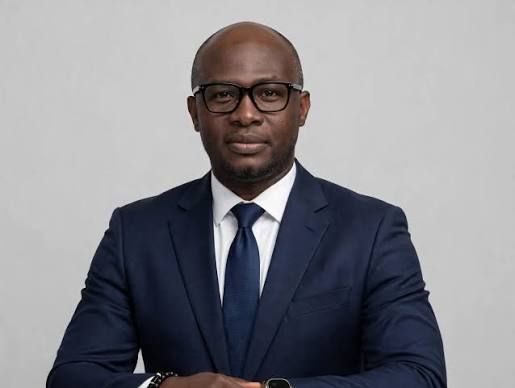
By Yusuf Babatunde Yusuf
I spent an entire month in Nigeria last month, staying in Lagos throughout. Business meetings took me everywhere, from the Island to the Mainland, and I had the opportunity to explore different parts of the city. Here are some of my observations.
Nigeria is not as bad as some of my fellow Nigerians in the diaspora make it seem. The way some of us speak about our country, you would think we never grew up there, attended school there, or even graduated from Nigerian universities.
The truth is that Nigeria is not stagnant. It is evolving, just like the rest of the world. Technology adoption, payment systems, lifestyle, and the way people do business are changing, even if we sometimes fail to acknowledge it.
Don’t get me wrong. Nigeria is far from where we want it to be. Our infrastructure, in many areas, is nothing to write home about. The level of hardship and suffering visible on our streets is heartbreaking. We have serious leadership challenges, and there is no denying any of these realities.
However, acknowledging our problems should not mean ignoring our progress.
A friend here in Canada asked me, after I returned, how I managed to cope and survive in Nigeria. I quickly reminded him that many of our friends back home are living comfortably, and some are even richer than many of us living abroad.
During my stay, I visited like five different high end residential neighbourhoods and estates, including areas on both the Island and the Mainland. I can confidently say that some of these places are comparable to, and in certain respects better than, my neighbourhood in the Greater Toronto Area. And with all modesty, I live in a good neighbourhood here in Canada.
One particular estate I visited in Ajah caught my attention. The landscaping, layout, infrastructure, and facilities were impressive. I have travelled from Rome, Tokyo, Hamburg, Barcelona and I can confidently say that what I saw there compared favourably with some of the residential developments I have encountered in other parts of the world.
On security, I know Nigeria has serious security challenges, and I am not dismissing them. However, I also think the picture painted by some people in the diaspora is often exaggerated. On three different occasions, I was on the Island to visit friends until around 1–2 a.m., and my driver drove me home through the Third Mainland Bridge to Anthony-Maryland. My experience was not one of the constant fear that some narratives would have you expect. Of course, personal experiences vary, and not every part of the country enjoys the same level of security.
On electricity, yes, the situation is bad. We cannot pretend otherwise. But Nigerians are also adapting, investing in solar energy, inverters, and other alternative power sources to keep their homes and businesses running.
Have we stopped to appreciate how convenient and sophisticated Nigeria’s digital payment ecosystem has become? I use financial services in both Canada and Nigeria on a daily basis.
Nigeria is ahead of Canada in several aspects of everyday digital payments and money transfers. From instant bank transfers to the widespread adoption of mobile banking, Nigeria has made remarkable progress in this area.
Yet, how often do we talk about these achievements when discussing our country abroad?
I believe we need to have more balanced conversations about Nigeria.
Living abroad should not make us blind to the realities of life back home, but neither should it make us dismiss everything happening in Nigeria as a failure. We cannot spend years complaining about our country while refusing to acknowledge the people building businesses, developing estates, adopting technology, creating jobs, and finding innovative solutions to everyday problems.
We must stop demarketing Nigeria!!! 🛑
Criticism is necessary. Accountability is important. Demanding better leadership, infrastructure, healthcare, education, and security is our right. But there is a difference between holding our country accountable and constantly portraying it as a place where nothing works and nobody cant thrive.
Nigeria is not where it ought to be. We have a long way to go, and millions of our people are going through difficult times. But we are not standing still. There is progress, innovation, ambition, and development happening all around us.
You can love Nigeria and still demand better from Nigeria. You can acknowledge its progress without denying its problems. And you can live abroad without convincing yourself that everything back home is inferior to everything abroad.
Sometimes, the problem is not that Nigeria has made no progress. It is that we have become so accustomed to focusing on what is wrong that we no longer recognise what is changing.
That is my observation.
Comments (0)
Comment policy →Be the first to comment.